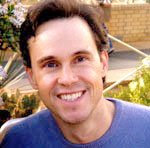
I’ve just returned from six weeks down under in Australia and New Zealand. As my wife Veronica is from Auckland it has become an annual ritual, which I can’t live without! It gives me the time and space to recover from the year that’s been, and to set myself up for the year to come. One of the highlights on this trip was reading Steve Jobs by Walter Isaacson – the exclusive biography. A gripping story which I couldn’t put it down (tough when you’ve got 3 kids!) Filled with countless pearls of wisdom, one of the points made which really rung true was the following:
One of Job's great strengths was knowing how to focus. "Deciding what not to do is as important as deciding what to do," he said. "That's true for companies, and it's true for products."
I love this idea of focus as each year I decide on a theme, which becomes my guiding mantra over the days and weeks to come. 2011 was about freedom as I set out on my own personal inquiry to deepen my understanding and experience of such an illusive quest. I have decided that 2012 is all about enjoyment. In the year of our London Olympics I am going to challenge myself to make this year my best year yet and to enjoy everything I do, all of the time - a big stretch.
To kick-start this focus on 10th February I’m running Your Personal Best 2012 with my great friends Robert Holden and Avril Carson. It’s our annual start-the-year event and will be filled with rich and creative conversations to help you go for gold in your work, life and relationships. Love to see you there. Ben
Friday, 13 January 2012

Friday, 19 August 2011
Real Leadership by Ben Renshaw
“Leadership is not a job; it’s a wiliness to be more of who you already are.” Ben Renshaw
What’s your leadership philosophy? Do you think leadership is simply a job grade, role, or title? I find it fascinating that most people I coach in leadership positions have not stopped long enough to work out what real leadership is. Having now run leadership development programmes intensively over the last few years I have arrived at 5 key principles, which I believe are at the heart of real leadership:
1. Having a clear identity.
2. Defining an inspiring vision.
3. Building authentic relationships.
4. Creating great performance.
5. Discovering true meaning.
I recently put this into practice as a result of working with a great person who has just stepped into a dream role. They had a reputation for being a brilliant thinker, however would leave most people feeling incompetent and anxious as a result of their investigative style of working. Our initial coaching was designed to help them think about who they really are, as ‘the only way you can really lead is to be real.’ They then defined an inspirational vision, which helped them to go beyond simply ticking off their ‘to-do’ list. This has allowed them to develop far more genuine relationships, and I know in time will create better performance in their team. The icing on the cake has been their willingness to recognise that life is too short just to have a job. They now get that ‘real leadership is knowing in every moment you can make a real difference.’
Real Leadership Workshop with Ben Renshaw
October 14, 2011
Email: info@successintelligence.com
Tuesday, 22 February 2011
Real Leadership by Ben Renshaw
Our team at Success Intelligence takes a theme each year that we pay particular attention to – this year it’s about Authentic Success, in honour of my friend Robert Holden’s book with the same title coming out in May 2011. Given the fact that I spend most of my time running leadership programmes for major organisations, I’ve decided to take a look and see what’s authentic and real about leadership.
There are four key areas which I believe are at the heart of real leadership:
1. Physical Leadership. The CEO at a company I work with talks about the ‘leaders walk’. He encourages his people to be very conscious about the way they ‘show up’ and to think about how they come across. This point was highlighted to me when I was working with a high performing team and people started talking about the senior leader of their division. What transpired was this guy sat on the left hand-side of the office. Each day he would use his side of the office to walk to and from his desk to the lift, bathroom and generally get around. However, the people on the right hand side of the office felt left out. In order to really make his physical presence felt, he needed to change his ‘leaders walk’, and make sure that he included the right-hand side of the office. Real leaders recognise that a small act makes a big difference.
2. Emotional Leadership. I’ve had the privilege of running the senior leadership development programme for InterContinental Hotels Group over the last 4 years called Leading with Purpose. We always start the event by asking people, ‘Who is your most admired leader, and why?’ 98% of responses from over 400 leaders across the world describe emotional capabilities such as; the ability to be open and honest, communicating with passion, having great resilience, being humble and inspiring others to act. Research shows that once you reach a certain point of recognition in your career, the defining factor that enables you to progress is the degree to which you are able to engage with people on an emotional level. One leader I worked with demonstrated a high level of emotional sensitivity. He made a habit of when someone achieved a notable success to send a personalised ‘thank you’ card to their home address. On one occasion he did this with an Engineer who was an ex-Marine and a tough guy. Having sent the card he was confronted by this employee coming into his office in a manner that left the manager convinced he was going to be beaten up. In fact what happened was the Engineer broke down in tears and said that he had never received a personalised thank you and it had made him feel really valued.
3. Thought Leadership. One of our favourite mantras at Success Intelligence is that ‘Leaders are not paid to be busy, they are paid to think.’ Although people always agree in principle when we share this idea, it doesn’t stop them from keeping too busy. Real leaders ensure that they carve out time to think in order to address a whole variety of challenges such as defining success, strengthening relationships, prioritising workload, communicating clearly. We firmly believe that if you are too busy, you are too busy; therefore real leadership is the ability to stop unnecessary busyness and start necessary thinking.
4. Inspirational Leadership. One of the most exciting projects that Success Intelligence is currently engaged with is running the largest leadership programme in the history of Heinz UK&I called Game-Changing Leadership. Involving 1000 leaders across the business we kicked-off with a company event in which we asked people what is the number 1 quality they look for in leaders. The overwhelming answer was inspiration. However, we believe that in order to inspire others you need to be inspired. Ask yourself, ‘What inspires you?’ Real leaders make sure that they place personal inspiration at the heart of their work and lives in order to authentically inspire others.
There are four key areas which I believe are at the heart of real leadership:
1. Physical Leadership. The CEO at a company I work with talks about the ‘leaders walk’. He encourages his people to be very conscious about the way they ‘show up’ and to think about how they come across. This point was highlighted to me when I was working with a high performing team and people started talking about the senior leader of their division. What transpired was this guy sat on the left hand-side of the office. Each day he would use his side of the office to walk to and from his desk to the lift, bathroom and generally get around. However, the people on the right hand side of the office felt left out. In order to really make his physical presence felt, he needed to change his ‘leaders walk’, and make sure that he included the right-hand side of the office. Real leaders recognise that a small act makes a big difference.
2. Emotional Leadership. I’ve had the privilege of running the senior leadership development programme for InterContinental Hotels Group over the last 4 years called Leading with Purpose. We always start the event by asking people, ‘Who is your most admired leader, and why?’ 98% of responses from over 400 leaders across the world describe emotional capabilities such as; the ability to be open and honest, communicating with passion, having great resilience, being humble and inspiring others to act. Research shows that once you reach a certain point of recognition in your career, the defining factor that enables you to progress is the degree to which you are able to engage with people on an emotional level. One leader I worked with demonstrated a high level of emotional sensitivity. He made a habit of when someone achieved a notable success to send a personalised ‘thank you’ card to their home address. On one occasion he did this with an Engineer who was an ex-Marine and a tough guy. Having sent the card he was confronted by this employee coming into his office in a manner that left the manager convinced he was going to be beaten up. In fact what happened was the Engineer broke down in tears and said that he had never received a personalised thank you and it had made him feel really valued.
3. Thought Leadership. One of our favourite mantras at Success Intelligence is that ‘Leaders are not paid to be busy, they are paid to think.’ Although people always agree in principle when we share this idea, it doesn’t stop them from keeping too busy. Real leaders ensure that they carve out time to think in order to address a whole variety of challenges such as defining success, strengthening relationships, prioritising workload, communicating clearly. We firmly believe that if you are too busy, you are too busy; therefore real leadership is the ability to stop unnecessary busyness and start necessary thinking.
4. Inspirational Leadership. One of the most exciting projects that Success Intelligence is currently engaged with is running the largest leadership programme in the history of Heinz UK&I called Game-Changing Leadership. Involving 1000 leaders across the business we kicked-off with a company event in which we asked people what is the number 1 quality they look for in leaders. The overwhelming answer was inspiration. However, we believe that in order to inspire others you need to be inspired. Ask yourself, ‘What inspires you?’ Real leaders make sure that they place personal inspiration at the heart of their work and lives in order to authentically inspire others.
Sunday, 13 February 2011
Valentine's Day: Loving Everyone

Happy Valentine’s Day to you. Traditionally, Valentine’s Day is the day we show our love to one special person in our life. This is a lovely thing to do. That said, I feel that Valentine’s Day would be even lovelier if we made it a day to show our love to everyone in our life. Everyone must also include our self too. Maybe we could start a new tradition. Starting from today. Below is a short poem called “Loving Everyone.”
If you want to find someone
to love,
I recommend you start
loving everyone
immediately.
Love will find you if you are
being the love
that
you
are.
If you want to learn how
to love someone
with all your
heart,
I advise you to fall in love
with everyone
a little bit
more.
Loving everyone is the key
to loving
someone.
And if you want someone
to love you
more,
I urge you to get on with it,
and to start
loving yourself.
Someone has to do it.
It may as well be you.
Show us how it is done.
So that you make it easy
for us to love
you too.
Monday, 31 January 2011
The Drama of Authenticity

“When do I feel most authentic?” This is the question I have been asking myself over the last week, in preparation for a workshop I am presenting tomorrow (Feb 1st, in Central London) with Ben Renshaw and Avril Carson called Authentic Success. Each day, for the last seven days, I have set aside 15 minutes to stop, be still, and sit with the question, “When do I feel most authentic?” Each time, I found the first five minutes or so to be very difficult: my mind would go blank, my heart wouldn’t register any feelings, and my body would get fidgety. I noticed I’d try to convince myself to cut short the fifteen minutes. Maybe I could read some inspirational quotations on authenticity instead. Someone else can do this for me.
Authenticity feels so natural, so why isn’t it easy? As I continued to sit with my inquiry, I gradually made contact with myself. It’s like I’d been away from myself, but I didn’t know it, not until just now: caught up in the habits of my personality; thinking thoughts all day long; busily trying to be someone; and putting on a face for all the other faces out there. Who is the real me? Not the personality that is manufactured in the world. The real me. Not the empty self that always wants something. The real me. Not a tinned version of a soul. The real me.
I kept sitting. I did not leave myself. I wanted to know my real thoughts. I wanted to feel my heart. I wanted to breathe more deeply again. My inquiry into “When do I feel most authentic?” felt frustrating and delightful; mysterious and illuminating; healing and joyful. I have long believed that being authentic is the key to success, happiness, love and all good things; but I have also experienced the fear of authenticity and so on. Such is the drama of authenticity. Such Is our daily challenge; and our daily choice. Success is recognizing who you really are; and happiness is letting yourself be you.
I hand the inquiry over to you now. When do you feel most authentic? Don’t let anyone else do your homework for you. Take fifteen minutes to stop, be still, and make contact with yourself.
Friday, 18 June 2010
Vision is not an exclusive club
By Ben Renshaw, Director of Success Intelligence
The development of great leadership is becoming more and more of a strategic priority for organisations. In a world of sameness, i.e. similar products, services and systems, what becomes a competitive differentiator is the quality of leadership that guides an organisation towards its vision. Success Intelligence is now involved in several major leadership development programmes in a variety of sectors including hospitality, manufacturing, banking and professional service firms. This month I wanted to share one of our key ideas to provoke your thinking about leadership:
Vision is not an exclusive club. We have been recently asked to run a leadership programme for 1000 managers in a large manufacturing organisation. Part of the initial challenge to engage people on this journey is that the majority of them do not think of themselves as leaders. The consequence of this mindset includes people waiting to be told what to do, failing to take accountability for their actions, limited decision-making and a short-term focus on results. In a world of work in which there is a need for people to demonstrate greater innovation and creativity, an ability to do more with less and to build collaborative partnerships, understanding that leadership is not for the chosen few is a critical aspect of breaking down narrow parameters that prevent people from fulfilling their potential.
The recognition that vision is available to all does not mean that you have to become a Steve Jobs, or Nelson Mandela. It does mean that you have to develop the ability to see things clearly and to have a well thought through definition of success. A few weeks ago I was running a session for an executive team with Robert Holden. We asked the team who had a written definition of success. One hand went up. This person described how 25 years ago they had formulated their vision for success. When we asked what benefits they had received as a result the individual said two things; Focus and Fulfilment. They went onto say that one of the most powerful aspects of having a clear vision was that it had given them a path to follow, providing important sign posts along their journey.
It can appear overwhelming at first when you start embracing the idea of vision. A simple exercise to provoke your thinking is to ask yourself, ‘What is success today?’ In other words, ‘How would you know at the end of a day if you’ve been successful or not?’ These questions are at the heart of Success Intelligence and on a personal note have been one of the most beneficial techniques to help me become more visionary. A couple of years ago I decided to really get to grips with these questions. One thing we do, as a team at Success Intelligence is to use legendary moleskine notebooks used by thinkers and artists like Pablo Picasso and Ernest Hemingway. These are our success journals. I committed to asking myself the question, ‘What is success today?’ every day for 365 days and writing down my answer. It got to the point that if I had forgotten to do it, by 11 o’clock I knew something was missing. I had to pull out my book and make sure that I had clarified what was most important for me that day. It had a profound effect not only on the way I felt, but also how I approached my work and life.
Here are three benefits of making vision your learning curve:
1. Making sure what’s important stays important. In a manic, busy and hyper world it’s easy to forget what really matters. The act of developing your vision brings you closer to what’s most precious in your life, work and relationships.
2. Overcoming our limitations. Most of the barriers that we have to resolve in life our self-imposed. Vision provides a context to face our fears and realise that we may be greater than we originally believed.
3. Enjoying the ride. As John Lennon famously said, ‘Life is not a dress rehearsal’. It’s easy to live so many years ahead of each day that we can fail to make the most of now.
As a result of this blog I encourage you to ask yourself, ‘What is success?’ daily for the next 30 days and allow yourself to receive the gift of vision.
The development of great leadership is becoming more and more of a strategic priority for organisations. In a world of sameness, i.e. similar products, services and systems, what becomes a competitive differentiator is the quality of leadership that guides an organisation towards its vision. Success Intelligence is now involved in several major leadership development programmes in a variety of sectors including hospitality, manufacturing, banking and professional service firms. This month I wanted to share one of our key ideas to provoke your thinking about leadership:
Vision is not an exclusive club. We have been recently asked to run a leadership programme for 1000 managers in a large manufacturing organisation. Part of the initial challenge to engage people on this journey is that the majority of them do not think of themselves as leaders. The consequence of this mindset includes people waiting to be told what to do, failing to take accountability for their actions, limited decision-making and a short-term focus on results. In a world of work in which there is a need for people to demonstrate greater innovation and creativity, an ability to do more with less and to build collaborative partnerships, understanding that leadership is not for the chosen few is a critical aspect of breaking down narrow parameters that prevent people from fulfilling their potential.
The recognition that vision is available to all does not mean that you have to become a Steve Jobs, or Nelson Mandela. It does mean that you have to develop the ability to see things clearly and to have a well thought through definition of success. A few weeks ago I was running a session for an executive team with Robert Holden. We asked the team who had a written definition of success. One hand went up. This person described how 25 years ago they had formulated their vision for success. When we asked what benefits they had received as a result the individual said two things; Focus and Fulfilment. They went onto say that one of the most powerful aspects of having a clear vision was that it had given them a path to follow, providing important sign posts along their journey.
It can appear overwhelming at first when you start embracing the idea of vision. A simple exercise to provoke your thinking is to ask yourself, ‘What is success today?’ In other words, ‘How would you know at the end of a day if you’ve been successful or not?’ These questions are at the heart of Success Intelligence and on a personal note have been one of the most beneficial techniques to help me become more visionary. A couple of years ago I decided to really get to grips with these questions. One thing we do, as a team at Success Intelligence is to use legendary moleskine notebooks used by thinkers and artists like Pablo Picasso and Ernest Hemingway. These are our success journals. I committed to asking myself the question, ‘What is success today?’ every day for 365 days and writing down my answer. It got to the point that if I had forgotten to do it, by 11 o’clock I knew something was missing. I had to pull out my book and make sure that I had clarified what was most important for me that day. It had a profound effect not only on the way I felt, but also how I approached my work and life.
Here are three benefits of making vision your learning curve:
1. Making sure what’s important stays important. In a manic, busy and hyper world it’s easy to forget what really matters. The act of developing your vision brings you closer to what’s most precious in your life, work and relationships.
2. Overcoming our limitations. Most of the barriers that we have to resolve in life our self-imposed. Vision provides a context to face our fears and realise that we may be greater than we originally believed.
3. Enjoying the ride. As John Lennon famously said, ‘Life is not a dress rehearsal’. It’s easy to live so many years ahead of each day that we can fail to make the most of now.
As a result of this blog I encourage you to ask yourself, ‘What is success?’ daily for the next 30 days and allow yourself to receive the gift of vision.
Monday, 8 February 2010
My Best Year Yet 2010
 By Ben Renshaw, Co-Director, Success Intelligence
On January 29th, Success Intelligence hosted a stunning public event (even though I say so myself) focused on making 2010 your best year yet. The day had been long in coming as we had put a lot of focus on it as a team to ensure that it had maximum impact both for us personally, and the 100 delegates that joined us on the day. It was a real mix of people who attended bringing together a selection of our corporate clients including Sky, Nationwide, Vodafone and Zurich with a range of other participants including entrepreneurs, teachers, coaches and health professionals.
I had the joy of co-presenting the day with the founder of Success Intelligence, Dr Robert Holden and fellow director Avril Carson. The day consisted of 4 key sessions to help make 2010 your best year yet:
1. Identity – being clear about who you are.
2. Success – understanding your definition of success.
3. Strategy – removing the blocks to success.
4. Shift – identifying your personal growth for the year ahead.
I thought it would be valuable to share some of the key insights that came out of the day:
Session 1
Stop the world I want to get off…Does this plea sound familiar? We are living faster than ever. The challenge with life running by in a flash is that we can miss out on what’s most important – ourselves. At Success Intelligence we often hear our clients make comments such as, “I barely have a minute to myself.” Or, “I’m 3 days behind in my life. I just need an extra 3 days to catch up.” This manic existence is not a great way of making the most of life and needs to be addressed. It starts with getting greater clarity about our own wisdom and making sure that we live it.
Success Intelligence is based on 4 key intelligences, which are the cornerstone of our wisdom:
PQ: The Energy of Success. Intelligence is an energy. We need to create the space to get plugged into it and get recharged. When we’re connected we listen to energy. Ask yourself, ‘What energizes you?’ ‘What enthuses you?’
EQ: The Heart of Success. ‘What do you love?’ ‘What is in your heart?’ Being successful means that you have a loving relationship with your heart. So often we override the wisdom in our heart through emotions such as fear or guilt. Let your heart lead you this year.
IQ: The Psychology of Success. As Robert Holden says in his book, Success Intelligence, “Sometimes you have to stop and think!” Think time is one of the most important ingredients for being truly successful as it helps you to tune into your best thoughts.
SQ: The Spirit of Success. The first book I wrote was called Successful But Something Missing. The title captures the experience of so many – external trappings but a gap in meaning. As we strive after success we can forget what’s really important. Real success is ensuring that what’s important stays important.
Following this input, our first major exercise on the day was to ask people to conduct a Success Review for 2009. We used 3 different lenses to look at success; your most meaningful, enjoyable and valuable successes from last year. It’s powerful to make success a learning curve and recognise what you have learnt about yourself through success.
Session 2
One of the core principles of Success Intelligence is, ‘Your definition of success influences every other significant decision in your life.’ Getting clear about what is success can save years of chasing false idols and pursuing happiness. In order to help people think about success for 2010 we invited them to try some possibility thinking.
One of the gifts of exercising possibility thinking is that it challenges you to look at your habitual self. This is the part of you that lives with deeply engrained habits, some of which are not so helpful. On a personal note one of my habits, which really doesn’t support me is the temptation to become cynical. For instance, if someone dares to suggest a new idea, or a better way of doing something, my initial response is to dismiss it. Employing possibility thinking encourages us to open our minds to inspiration and help make sure that our life isn’t just a series of repeats.
The exercise we set people was to explore the question, ‘How good can this year get?’ I really recommend having a go at this if you want to get high on your own thinking!
Session 3:
Having explored how good 2010 could get, we then challenged people to reflect upon how they might fail. The purpose of doing this is that although we don’t tend to consciously set ourselves up for failure, our habitual self can easily slip into old ways of doing things that take us off track. Avril Carson quoted part of a powerful poem from GK Chesterton, ‘Unless a man starts afresh about things, he will certainly do nothing effective.’
We highlighted 5 particular blocks to watch out for that could derail you from your good intentions. I’m going to mention a couple of my favourite below:
1. Hyper-cynicism. As I mentioned above I’m an expert in cynicism. Essentially cynicism is a defensive mechanism we employ to prevent us from getting disappointed. The other side of cynicism is passion, so watch out when you meet new opportunities with a cynical approach.
2. The Work Ethic. This pattern is based on the idea that the key to success is hard work and then some more. There’s no doubt that working hard can be a helpful trait, however we live in a world in which most people overly work, leading to exhaustion and a lack of creativity and imagination. How can you work smarter, not harder this year?
Session 4:
Our final session was called, The Shift. The key principle we introduced was, ‘Your life will not grow if you do not grow’. The initial exercise we set was to think about how you grew in 2009, what helped you to grow and the benefits you received. This was followed up by defining how you would like to grow this year, the benefits you hope to gain and what help you will require. We provided people with a couple of tools to help them record their good intentions and commit to following through.
I was so touched by the day that as Robert was closing, he turned to Avril and myself to invite a final comment and I was left speechless. Maybe 2010 will be a quieter year in my life. My family will thank me!
Wednesday, 11 November 2009
Leadership Success

by Ben Renshaw, Co-Director of Success Intelligence
Today was a significant event as the 150 leaders of Government Council gathered together to focus on how they were going to create leadership success in an uncertain future. As a Council they are being faced with needing to make 12-20% financial cuts over the next 3 years, which they recognise means that they will have to discover new ways of leading to deliver the same quality of service with less resource.
I had been invited to stimulate their thinking and had put together 3 key leadership themes to explore:
1. Leadership inspiration.
I started off with the idea that leadership is inspiration. I cited research from the Department of Trade and Industry who conducted a national survey to find out the components of successful leadership. Top of the list with 53% of respondents was inspiration. However, when asked how inspirational employees found their leaders only 11% believed that their leaders had the ability to inspire. This was in marked contrast to the 75% of leaders who thought that they did inspire their people. I find this ‘inspiration gap’ very common. In fact I would go as far to say that it’s quite rare to find leaders who genuinely set a compelling example for their people on a regular basis.
The first challenge I set the group was to think about the kind of decisions they make in the formative part of their days. Responses included, ‘Hit snooze’, ‘Walk the dog’, ‘Get the kids up’, ‘What am I going to wear?’ Inspirational stuff from a room of senior leaders! I set out a proposition that being inspirational starts with a mindset. It is influenced by the type of decisions you make each day. Set the intention to be inspirational and it will encourage you to make it a priority. I then invited people to reflect upon what inspires them through questions such as, ‘What do I love?’ ‘What is my joy?’ ‘What is my passion?’ It was heartening to see a group move from being relatively cynical about leadership to becoming genuinely engaged with the recognition that in order to inspire others, they need to be inspired themselves.
2. Leadership style.
Great leaders have the ability to read situations well and adapt their styles accordingly. One of the most outstanding leaders I know is a CEO who has a remarkable ability to flex his style in an effortless way including fronting up to the City, communicating with shareholders, working with his executive team and inspiring his employees. However, it wasn’t always the case. When he landed the coveted job of CEO he was renowned for a highly directive style, which had certainly helped him get where he was, but was not going to help him succeed in the future. He quickly recognised that in order to engage his workforce he needed to develop a variety of styles, in particular a collaborative style that ensured others felt important through being consulted, listened to and trusted.
Daniel Goleman, author of Emotional Intelligence, conducted extensive research on leadership styles and identified 6 key styles, each of which has a different impact on the quality of the culture in an organisation. In his well-known Harvard Business Review article, 'Leadership That Gets Results', the most positive style that emerged was a visionary one. The ability to articulate a compelling vision with the message, ‘Come with me’ creates the necessary alignment to take a company forward. Other styles with a positive impact included a democratic and coaching approach. The most negative styles were a commanding/coercive style, which is appropriate in a crisis, but if used overtime causes high levels of disengagement, and a pace-setting approach, which certainly helps drive performance, but if overused burns people out and is not sustainable.
3. Leadership growth.
I challenged the audience to think if they have reached their leadership peak, or do they still have room to grow? One of the key principles of Success Intelligence is ‘For an organisation to grow, its leaders need to grow’. In our work we see a direct correlation between individual and organisational development. In fact the consultancy McKinsey cited important research from their seminal work, War for Talent, which showed that 53% of managers left their jobs specifically due to a lack of development, in the form of coaching, mentoring and job rotation.
Take a moment now to think about how have you grown so far in 2009, and how you intend to grow coming into 2010?
I want to leave you with the idea that leadership success is not a position, title, or role. Ultimately, it is a commitment to giving your best energy, opening your heart, sharing your thoughtful reflections and being inspired yourself.
Monday, 2 November 2009
Leading with Purpose
by Ben Renshaw, Co-Director of Success Intelligence
I have recently completed the 18th Senior Leadership Program for InterContinental Hotels Group, the largest hospitality company in the world. It is a global program spanning Europe, Middle-East & Africa, Asia-Pacific and America. Over 250 of the most senior leaders in the organisation have participated on the journey during the last three years with remarkable results. The program has received a 100% rating for ‘recommend to colleagues’, and a 100% score for ‘return on investment’ from the delegates.
IHG created a core purpose for the business, ‘Great Hotels Guests Love’. The premise of the program is that for an organisation to become purpose-led its leaders need to understand their own personal purpose and place it at the heart of the way they inspire and lead their people.
The program is spread over a 3-day period. Day one explores the modern context in which leaders have to operate today. It is a picture that captures the complex, fast paced and uncertain times in which we live and requires a new mindset, which embraces a quantum perspective that thrives on ambiguity, welcomes the unknown, capitalises on instinct and recognises that there is not just one answer to the myriad of challenges we face. We then go on to look at the various leadership styles required to inspire, engage and align people in today’s modern age such as being visionary, directive and performance focused. The end of the day gives people the space to start to reflect upon what they stand for as a leader and identifies their own personal purpose. We use a lifeline exercise, which invites people to reflect upon the key experiences of their life to date, draw conclusions from these events in terms of their impact and identify their deepest values as a consequence. They are then asked to draw a graph that represents when they have been most fulfilled to explore their core purpose. Using questions such as, ‘When are you at your best?’ ‘What is your joy?’ ‘What do you love?’ ‘What do you want to contribute?’ ‘What difference do you want to make?’ people begin to clarify their “raison d’etre.”
On day 2 we have the opportunity for participants to share their ‘leadership story’. This is always the highlight as we listen to riveting accounts of what has shaped people’s experience and what they stand for today. Encouraging feedback is given following each presentation in order to accelerate learning and development. The afternoon is a coaching intensive in which we apply non-directive coaching skills on real business issues. We are fortunate that in the evening the President of each region joins us for an informal dialogue over dinner in which they recount their own leadership story and listen to where delegates have come.
Our final day is devoted to building more leadership skills such as engaging people and giving accurate feedback. The last assignment is that participants create their own compelling vision of how they want to be as a leader in the future. Finally people are challenged to make some specific commitments to changing their behaviour, without which the sustainability of the program will be compromised as it’s all too easy to revert back to old habits.
I believe that the program is a sign of the times. Money is not enough to satisfy our wishes. Job security although welcome does not provide sufficient meaning. Ultimately we need to discover our core purpose, our real calling in order to enjoy authentic success.
I have recently completed the 18th Senior Leadership Program for InterContinental Hotels Group, the largest hospitality company in the world. It is a global program spanning Europe, Middle-East & Africa, Asia-Pacific and America. Over 250 of the most senior leaders in the organisation have participated on the journey during the last three years with remarkable results. The program has received a 100% rating for ‘recommend to colleagues’, and a 100% score for ‘return on investment’ from the delegates.
IHG created a core purpose for the business, ‘Great Hotels Guests Love’. The premise of the program is that for an organisation to become purpose-led its leaders need to understand their own personal purpose and place it at the heart of the way they inspire and lead their people.
The program is spread over a 3-day period. Day one explores the modern context in which leaders have to operate today. It is a picture that captures the complex, fast paced and uncertain times in which we live and requires a new mindset, which embraces a quantum perspective that thrives on ambiguity, welcomes the unknown, capitalises on instinct and recognises that there is not just one answer to the myriad of challenges we face. We then go on to look at the various leadership styles required to inspire, engage and align people in today’s modern age such as being visionary, directive and performance focused. The end of the day gives people the space to start to reflect upon what they stand for as a leader and identifies their own personal purpose. We use a lifeline exercise, which invites people to reflect upon the key experiences of their life to date, draw conclusions from these events in terms of their impact and identify their deepest values as a consequence. They are then asked to draw a graph that represents when they have been most fulfilled to explore their core purpose. Using questions such as, ‘When are you at your best?’ ‘What is your joy?’ ‘What do you love?’ ‘What do you want to contribute?’ ‘What difference do you want to make?’ people begin to clarify their “raison d’etre.”
On day 2 we have the opportunity for participants to share their ‘leadership story’. This is always the highlight as we listen to riveting accounts of what has shaped people’s experience and what they stand for today. Encouraging feedback is given following each presentation in order to accelerate learning and development. The afternoon is a coaching intensive in which we apply non-directive coaching skills on real business issues. We are fortunate that in the evening the President of each region joins us for an informal dialogue over dinner in which they recount their own leadership story and listen to where delegates have come.
Our final day is devoted to building more leadership skills such as engaging people and giving accurate feedback. The last assignment is that participants create their own compelling vision of how they want to be as a leader in the future. Finally people are challenged to make some specific commitments to changing their behaviour, without which the sustainability of the program will be compromised as it’s all too easy to revert back to old habits.
I believe that the program is a sign of the times. Money is not enough to satisfy our wishes. Job security although welcome does not provide sufficient meaning. Ultimately we need to discover our core purpose, our real calling in order to enjoy authentic success.
Tuesday, 22 September 2009
Coaching Success – Making personal development a key strategic priority

by Ben Renshaw, Co-Director of Success Intelligence
A key principle of Success Intelligence coaching is, ‘Some people go through life, whilst others grow through life’. The choice is yours. However, in today’s climate of unpredictable change, the difference between success and failure can lie in how you prioritise your own personal development.
Every organisation I work with, such as BAA, the world’s leading airport company, or Premier Foods, the UK’s largest food provider, is investing more time, energy and resource into developing their greatest asset – their people. The cynicism that used to accompany leadership and management development programs is a thing of the past. In fact the tide has turned so much that development is now seen as a competitive advantage, including having a personal coach.
So how do you prioritise your personal development when you’ve got an overflowing inbox, a multitude of deadlines and challenging customers to serve? Well, here are 3 ideas to support your learning and development:
1. Vision for success. John is director of retail for a leading high street brand. I was invited to coach him in taking his next step. When I asked John how he had reached his current position, he responded by saying, ‘long hours’. However, he recognised that this was not sustainable going forward as he had a young family, and a recent 360 feedback exercise had pointed to the fact that people were looking to him for greater imagination and creativity, not more graft. We started our coaching program with the question, ‘What is success in your work, life and relationships?’ John was flawed. He realised that although he had worked hard to be successful, he hadn’t worked out what real success was for him. Before you get busy doing lots of stuff, stop and work out what success is for you. Ask yourself, ‘What is my definition of success?’ ‘What difference do I want to make in my work, life and relationships?’ What is most important to me?’ What do I really enjoy?’
2. Commit to your priorities. Once you have greater clarity about success you can then focus on what will help you to be truly successful. One of the biggest blocks I hear from my clients is that they are unable to prioritise what's most important due to a lack of time. We forget that we cannot manage time, we manage priorities. As we know there are only 24 hours in a day, therefore your time has to be influenced by what’s going to be most valuable. I remember a lawyer telling me that the most challenging time in his life was weaning himself off his long hours (when you’re billing in 6 minute units this is really tough). His fellow partners thought he’d lost the plot when he took 2 weeks to step back from his practice and re-evaluate how he was going to work going forward. When he did come back he discovered a renewed passion and vitality for his work, he deepened his relationships with clients and colleagues and most importantly, his family got to know him again. Ask yourself, ‘What are my key priorities to help me be successful?’
3. Ask for support. I have just returned to work following the birth of my third child. After completing my first meeting with my team members at Success Intelligence, I realised that I could feel the heat was on with the amount of work I had in the pipeline and the increased challenges at home. I couldn’t just keep doing what I had been doing prior to this change. So I asked the team for help. Specifically I requested that they give me feedback about how they see me respond to pressure and how I can be more effective. The response blew me away. The team spontaneously reached out to me and offered me great insight that will make a big difference to how I perform going forward. My friend, Robert Holden created a great motto for our sister project on happiness (www.behappy.net) ‘If you are alive you need help’. Don’t be too proud to reach out to your family, friends and colleagues and ask them to give you the support that will support your success.
Tuesday, 15 September 2009
5 Key Measures of REAL Success

I’m in Milan, Italy today coaching a team of leaders who are responsible for three global brands that are each the No.1 brand in their field.
We began the day by reviewing the question, “What is success?” As ever, the conversation was interesting, informative, and helpful. “What is success?” is a good question. After that, we explored the question, “What is REAL success?” This time the conversation went to a whole new level. It was illuminating, energizing, and revelatory. “What is REAL success?” is a great question.
Exploring “What is REAL success?” is an invitation to dive deeper into what really moves you, inspires you, touches you, engages you, and helps you to feel most alive and on purpose. I love this question. To finish the session, we each made a list of 5 key measures that help us to identify REAL success. Here are my five measures:
1. Love: Love is success. Love is happiness. Love is my purpose. Love is the whole point of everything. And whatever I do, I do it for love. The more loving I am, the more successful I feel.
2. Oneness: I feel an abiding sense of oneness with my creator, with my soul, with my family, with my friends, with humanity, and with nature. I am inspired and sustained by Oneness.
3. Forgiveness: I gladly let go of all grievances, regrets, wounds, rejections, and disappointments that happened once upon a time. Forgiveness helps me to live in the present tense.
4. Grace: I notice how I am helped everyday – by angels seen and unseen - in a hundred thousand different ways. Right place; right time. I gladly accept the universal help that is always on offer to me.
5. Gratitude: I don’t wait for my life to get better before I start to practice gratitude. The more grateful I am, the wealthier I feel. Gratitude is a miracle because it shows me thatit’s all here now.
OK, those are my five measures. Writing them down feels great. Totally affirming. Now it’s your turn. What are your five key measures that help you to identify REAL success? Grab a pen and paper, and start writing.
Tuesday, 8 September 2009
10 Symptoms of Entrepreneurial Spirit

If someone was to ask you, “Are you an entrepreneur?” what would you say?
“Yes” or “No?”
“Maybe” is not an option.
If your answer is “Yes,” how so?
What makes you an entrepreneur?
Be specific now!
How would you describe the tell-tale signs of entrepreneurial spirit in you?
If your answer is “No,” I recommend that you take a closer look at your life, your work, and your relationships. Maybe entrepreneurship is so natural to you that you haven’t thought of giving a name to it. It’s just who you are; and you just do it!
On September 23rd, I will present a master-class on Unconditional Success & Happiness to the Inspired Entrepreneur Group, in central London. I am particularly excited about this event, as my long-time friend Nick Williams is one of the founders of the Inspired Entrepreneur Group. Nick is one of the world’s most eloquent and passionate thought-leaders on inspiration, purpose, and, entrepreneurship. Nick not only talks and writes about inspiration; he is an inspiration. Anyone who has met Nick, will tell you so.
So what is an entrepreneur? It sounds a bit French, doesn’t it! And what is the entrepreneurial spirit? Well, here are ten symptoms that I have come up with which might help you to recognize it in you and release it even more into our life.
Ten Symptoms of Entrepreneurial Spirit
1. An entrepreneur knows that the real world is made up not of particles, but possibility.
2. An entrepreneur sees that the world is a cause, and we are the effect.
3. An entrepreneur realizes that you have to be what you want in order to get what you want.
4. An entrepreneur doesn’t get caught up in the search for happiness; they simply follow their joy.
5. An entrepreneur doesn’t have a job; they have a purpose.
6. An entrepreneur doesn’t wait for life to happen; they begin.
7. An entrepreneur has a basic trust that all honest endeavours receive a grant of unconditional universal support.
8. An entrepreneur rides the creative waves of the cosmos, and sometimes they fall off, but they always get back on again.
9. An entrepreneur prays for help every step of the way.
10. An entrepreneur participates wholeheartedly in the miracle of creation and this is what helps them to grow.
Monday, 24 August 2009
The More Loving One - by Avril Carson
I’ve been at the Edinburgh festival, steeped in the excitement of all manner of comedy, drama, artistic and creative expression. But something that has stayed with me is Alexander Mc Call Smith quoting a line of Auden: “Let the more loving one be me”. (In fact he answered it to a rather strange question about choosing a line to be tattooed on his hand). I found the poem on the internet as soon as I arrived home and loved the context of the line that preceded it:
“If equal affection cannot be
Let the more loving one be me”
I knew it would not be Auden’s intention to suggest that there could be solace in any moral high ground and superiority in such an intention. But on reading the whole poem it was clear that Auden is speaking profoundly about our daily experience. Indifference, Auden writes, is the least we have to fear and the poem has additional themes to the one I consider here. However, knowing other people will not always like us or love us or even tolerate us, indeed that they may judge us, undermine us and even reject us, Auden reminded me to think again. What if someone else has started an argument? So what if they should have done or said anything differently? Our complicit reactivity, as a friend of mine said recently, is the way that wars begin.
I’ve been taking this very personally and loving the power of the line quoted above whenever I have recalled it to mind. The effects are delightful and heartwarming and as I feel a lighter energy, I’m aware of a profound change. At one level it’s so obvious; we all know the power of this already. It’s at the heart of most of the world religions but as we live out the daily drama, our politics and our personal decisions seem to lose their way. We start to make up a different story, one where there is someone who is right and therefore someone who is wrong. Someone who is more important and therefore someone who is less important, and so on as we then act it all out in a very different drama of recrimination and justification.
So if it’s useful what can we do to remember?
“If equal affection cannot be, let the more loving one be me.”
To read the poem in full, click HERE.
“If equal affection cannot be
Let the more loving one be me”
I knew it would not be Auden’s intention to suggest that there could be solace in any moral high ground and superiority in such an intention. But on reading the whole poem it was clear that Auden is speaking profoundly about our daily experience. Indifference, Auden writes, is the least we have to fear and the poem has additional themes to the one I consider here. However, knowing other people will not always like us or love us or even tolerate us, indeed that they may judge us, undermine us and even reject us, Auden reminded me to think again. What if someone else has started an argument? So what if they should have done or said anything differently? Our complicit reactivity, as a friend of mine said recently, is the way that wars begin.
I’ve been taking this very personally and loving the power of the line quoted above whenever I have recalled it to mind. The effects are delightful and heartwarming and as I feel a lighter energy, I’m aware of a profound change. At one level it’s so obvious; we all know the power of this already. It’s at the heart of most of the world religions but as we live out the daily drama, our politics and our personal decisions seem to lose their way. We start to make up a different story, one where there is someone who is right and therefore someone who is wrong. Someone who is more important and therefore someone who is less important, and so on as we then act it all out in a very different drama of recrimination and justification.
So if it’s useful what can we do to remember?
“If equal affection cannot be, let the more loving one be me.”
To read the poem in full, click HERE.
Monday, 6 July 2009
Poem: Prizes of NOW

Hello Monday morning!
It's the start of the week. Just another week, or, maybe a brand new week. Our choice, I imagine. Monday mornings are the perfect time to think again about what is success and what is happiness. Ten minutes is enough to clear the mind, to listen to your heart, and to align yourself with what is truly important. But I urge you to do it before the busyness kicks in and before the daily rush takes you away from yourself. Do it now. To support you in your meditation here is a poem I wrote called "Prizes of NOW."
This constant busyness is not really
my life.
The urge to keep moving forward
is not it either.
The daily schedule is mostly a
distraction, truth be told.
If I was to stop, I mean really stop,
I fear I might lose my way. But I
am already lost.
If I was to stop, I mean totally stop,
I fear I might fall apart. But my
life is already in pieces.
If I was stop, stop, stop,
I fear I might die.
And yet, because I will not stop,
I fear I am not really alive.
It’s in the spaces that exist in the
chains of busyness, that
I find myself again.
It’s when I stand still, even for just
a moment, that I win the
prizes of now.
It’s when I am willing not to be too
busy that I really start
to live.
Wednesday, 17 June 2009
Relationships - The Heart of Success
 Today the Success Intelligence team is hosting a half-day master- class on Success Intelligence in the heart of London. Ben Renshaw and I are co-presenting. This event also coincides with a celebration for the launch of our S.I. website this year. One of the themes we will explore today is relationships are the heart of success.
 So many of us have grown up with parents who sacrificed themselves for the family, and who sacrificed their relationships with family, friends, and partners for their work. Our challenge is to make sure we do not repeat the same mistakes. Success does require sacrifice. Specifically, it requires sacrificing what is not important for what is. With that in mind, I invite you to read the following inventory, taken from my book Success Intelligence.
In the name of success,
how many bedtime stories am I prepared to miss?
In the name of success,
how many family dinners am I happy to give up?
In the name of success,
how many dates with my partner can I afford to lose?
In the name of success,
how many friendships am I willing to discard?
In the name of success,
how many weekends have I resigned to throw away?
In the name of success,
how many school plays am I prepared to miss?
In the name of success,
how many kisses good bye will I not make time for?
In the name of success,
how many beautiful sunsets together will I sacrifice?
Monday, 1 June 2009
Show Up and Shine
Show Up and Shine
By Avril Carson, Co-Director of Success Intelligence
I love the part in Marianne Williamson’s book A Return to Love where she tells us: “Your playing small doesn’t serve the world”. She talks about liberating ourselves and inspirationally liberating others; this is exactly what my work with ‘Show up and Shine’ is all about.
Isn’t it curious how one human being can glow with what we call ‘charisma’, whilst another human being is hardly noticed?
Most of us have experienced both of these things at different times, and we’ve probably had a whole range of other experiences in between. It is crucial to remember that all of us have the ability to choose how we show up.
“Many years ago I signed up for a 3-day course. As I walked into the room before the course began, I took a decision that was to change my whole experience of the event. The phrase that came into my mind was ‘be a key player’. Not only was it odd that this phrase entered my mind, but I was surprised to find myself purposefully taking a seat in the front row! I started to engage with everyone that came in who wanted to chat. When the course began I asked questions, and when I had a breakthrough, I shared it.
This may sound like ‘no big deal’ to some, but the benefits were way beyond anything I could have imagined. In those 3 days I gave myself a challenge: to live my values on the equality of all human beings, to respect all opinions including my own, and my right to voice them if useful. I was inspired to raise my game. I realised that previously, I had been waiting for everything to feel ‘right’ and for other people to encourage me and I hadn’t ever really thought about what it meant to ‘Show up’ in my life, let alone ‘Shine’.
So when I did show up on that course, I was amazed at people’s positive response, the warmth and appreciation shown to me during the three days. I enjoyed every moment, I soaked up and retained invaluable learning, and made enduring friends.
In my work since then, I have explored communication and how we can become more aware, awake and engaged in order to release our potential to be more engaging and inspiring in all of our relationships.
What if it is true that the whole world actually conspires with us when we choose to ‘Show up and Shine’? What if we can experience a transformation of the world as we know it and that world is waiting for all of us right now?
The first step is to notice, and I suggest with some kindness, what effect you’ve been having. Then, imagine yourself having the courage to create the effect you’d love to have. Kindness is encouraging. It has clarity. Kindness recognises our highest potential. It is not sloppy or sentimental. It is firm and supportive.
Courage is your ticket to ride. Get curious about the impact a human being like you can have, and then just watch what happens to your world!
If you are interested in ‘Show up and Shine’ I am running a 1 day workshop on the 25th June at the Columbia Hotel in London. This work is usually only offered in corporations, so take advantage of this public and open setting. It will be a supportive, positive, honest, encouraging and brilliant space for you to experiment and think deeply about how you too could Show up and Shine whatever the weather!
Click here: www.marianne.com for more on A Return to Love
By Avril Carson, Co-Director of Success Intelligence
I love the part in Marianne Williamson’s book A Return to Love where she tells us: “Your playing small doesn’t serve the world”. She talks about liberating ourselves and inspirationally liberating others; this is exactly what my work with ‘Show up and Shine’ is all about.
Isn’t it curious how one human being can glow with what we call ‘charisma’, whilst another human being is hardly noticed?
Most of us have experienced both of these things at different times, and we’ve probably had a whole range of other experiences in between. It is crucial to remember that all of us have the ability to choose how we show up.
“Many years ago I signed up for a 3-day course. As I walked into the room before the course began, I took a decision that was to change my whole experience of the event. The phrase that came into my mind was ‘be a key player’. Not only was it odd that this phrase entered my mind, but I was surprised to find myself purposefully taking a seat in the front row! I started to engage with everyone that came in who wanted to chat. When the course began I asked questions, and when I had a breakthrough, I shared it.
This may sound like ‘no big deal’ to some, but the benefits were way beyond anything I could have imagined. In those 3 days I gave myself a challenge: to live my values on the equality of all human beings, to respect all opinions including my own, and my right to voice them if useful. I was inspired to raise my game. I realised that previously, I had been waiting for everything to feel ‘right’ and for other people to encourage me and I hadn’t ever really thought about what it meant to ‘Show up’ in my life, let alone ‘Shine’.
So when I did show up on that course, I was amazed at people’s positive response, the warmth and appreciation shown to me during the three days. I enjoyed every moment, I soaked up and retained invaluable learning, and made enduring friends.
In my work since then, I have explored communication and how we can become more aware, awake and engaged in order to release our potential to be more engaging and inspiring in all of our relationships.
What if it is true that the whole world actually conspires with us when we choose to ‘Show up and Shine’? What if we can experience a transformation of the world as we know it and that world is waiting for all of us right now?
The first step is to notice, and I suggest with some kindness, what effect you’ve been having. Then, imagine yourself having the courage to create the effect you’d love to have. Kindness is encouraging. It has clarity. Kindness recognises our highest potential. It is not sloppy or sentimental. It is firm and supportive.
Courage is your ticket to ride. Get curious about the impact a human being like you can have, and then just watch what happens to your world!
If you are interested in ‘Show up and Shine’ I am running a 1 day workshop on the 25th June at the Columbia Hotel in London. This work is usually only offered in corporations, so take advantage of this public and open setting. It will be a supportive, positive, honest, encouraging and brilliant space for you to experiment and think deeply about how you too could Show up and Shine whatever the weather!
Click here: www.marianne.com for more on A Return to Love
Saturday, 30 May 2009
Success is a REAL Yes!

Today I (Robert Holden) am giving a 1-day workshop on success intelligence and the inner-life of a leader. The workshop is taking place in Manhattan, and is being hosted by One Spirit. One of the themes I will be exploring is “The Real Yes.”
I believe a leader is anyone who senses the big YES in their belly and immediately goes into labour; I believe a leader is someone who feels the deep YES in their heart and dares to follow it; I believe a leader is everyone who listens to the true YES in their mind and trusts it as their guide; and I believe a leader is who you are when you identify the real YES of your soul and really live it.
Leadership is receptivity; leadership is heartfelt; leadership is listening; leadership is being who you really are. So what is your real YES? What is it that you really say YES to?
On this note, I offer you something I once wrote called “The Real Yes.”Yes!
I took a chance.
And, yes,
I took a risk.
And, yes,
I gave it a go,
And, yes helped me
get past "No."
I can,
I know I can.
I'm able,
I know I'm able.
I will,
I know I will.
No longer am I
standing still.
I heard myself say,
"but," and "no," and "won't,"
"maybe," and "if," and "only,"
and "shan't", but it was "Yes!"
that got me past "can't."
"Yes" brought out the best in me.
I said "Yes!"
A real "Yes!"
Tuesday, 19 May 2009
Coaching Success – Practical wisdom for experiencing Genuine Success.
by Ben Renshaw - Co Director of Success Intelligence
The current economic crisis has turned up the heat on individuals, teams and organisations needing to find new ways of working smarter. Whether I’m running Senior Leadership Development Programs for IHG, the largest hospitality company in the world, coaching Executives at Sky, the number 1 provider of entertainment in the UK, or training Head Teachers in the Scottish Borders to become great coaches, I have found that the most effective way of helping people create new solutions is through the power of coaching.
I have identified 12 qualities for Coaching Success based on the 4 Intelligences that underpin the work of Success Intelligence – PQ (the energy of success); EQ (the heart of success); IQ (the psychology of success); and SQ (the spirit of success). The following are three of these qualities, which are particularly relevant in these unpredictable times:
- Managing energy well for enjoying sustainable success. I’ve just returned from a very restful holiday in Thailand. It never ceases to amaze me how much rest I need to catch up with after the exertions of my regular workload and looking after my two young kids! When the pressure is on the ability to renew energy becomes even more important. It enables you to think clearly, be decisive, communicate well, and take smart moves. Coaching Action: What do you need to get re-energized? Commit to 3 actions that will improve your energy.
- Engaging authentically through openness and honesty. Probably the biggest cause of wasted time and energy in organisations is due to the lack of openness and honesty in conversation. A client recently summoned the courage to tell his CEO that the organisation was not demonstrating enough hunger for creating sales and cited numerous examples of competitors who were taking the lead in new ways to attract custom. The CEO asked him why he hadn’t shared this opinion earlier. The client had to admit that the last time he gave direct feedback to colleagues the CEO had told him to stop putting down his peers and was therefore cautious about doing it again. By not speaking up we place a high risk of failing to address key issues. As Alan Weber, the editor of the Harvard Business Review said ‘Conversations are the new form of work’. Coaching Action: Who do I need to be more honest with? What do I need to say? When will I have this important conversation
- Being vision led by having a clear definition of success. A key principle of Success Intelligence is, ‘Your definition of success influences every other significant decision in your life’. Now more than ever before we need to work out what real success means for us. Traditionally people have associated success with financial accomplishment and a position, e.g. being the biggest, largest, fastest etc. One of the opportunities emerging out of the global meltdown is to redefine success. I got a real surprise at the beginning of this year when I asked a client about his definition of success for 2009. Historically he had been very focused on hitting targets and beating the competition. He said that the current climate had forced him to think deeply about what really matters and he identified 3 key things as measures of success – people, development and philanthropy. Coaching Action: What is your definition of success? Schedule time to clarify success in your work, life and relationships.
Thursday, 2 April 2009
Be Happy - Available NOW in US

We are delighted to announce the publication of Robert Holden's new book Be Happy. While the official launch date is April 15th, the book is available now on Amazon.com and also in bookstores across America.
To celebrate the launch of Be Happy, publishers Hay House have published a Be Happy film on You Tube.
Hay House has also issued an E-blast with a number of generous offers on it. For example:
If you order Be Happy now you will be entered to win two full-conference tickets to see Robert Holden live at the I CAN DO IT! San Diego Conference on May 1-3, 2009 (including hotel accommodations for two nights). You can also enter to win access to Robert Holden's Be Happy eight-week online workshop starting on April 15 or the Be Happy Abridged Audio Book 6-CD Set. Winners will be chosen on Apr 13!
Also if you order Be Happy between April 2 and April 30 you will receive gifts from Hay House and sponsors, including: (1) Free access to Lesson #1 of Robert Holden's Be Happy eight-week online workshop ($20 value) and (2) Audio excerpts from the Be Happy Audio Book ($5.95 value).
Friday, 27 March 2009
Be Happy - 8-Week Course Online - Starts April 15th

I am delighted to announce dates for the first ever Be Happy 8-Week course Online. The course is hosted by Hay House publishers, and it consists of a weekly 2-hour live session, in which I will take your calls and respond to your e-mails, while coaching you on essential principles of happiness. You can choose to listen to each session live or on-demand (at a time convenient to you). To purchase a ticket for this event go to Hay House.
As a special offer, Hay House are offering for those who book now a complimentary copy of my flip callendar Happiness NOW.
Below is a short outline of what I will cover on the 8-week program. I hope you can join me.
NOW, for the first time ever, you can take the Be Happy 8-week online course. Step-by-step, Robert introduces you to a set of proven principles and exercises that psychologists have hailed as “a genuine fast-track to happiness.” With his trademark insight, warmth and humor, Robert will share personally with you his distinctive philosophy and practice on how to experience true self-acceptance, everyday abundance, loving relationships, and inner success.
Week One: The Gift of Happiness
Part 1: Defining True Happiness
Create a definition of happiness that really works for you.
Part 2: A Happy Learning Curve
Identify what your life is teaching you about happiness right now.
Week Two: The Happy Self
Part 1: #1 Happiness Principle
Get this principle, and you will attract more happiness instantly.
Part 2: Follow your Joy
Give up the pursuit of happiness and start following your joy.
Week Three: Choosing your Life
Part 1: Choosing Happiness
Learn how to choose happiness, instead of chasing happiness.
Part 2: Healing Unhappiness
Learn how to handle unhappiness in an honest and positive way.
Week Four: Joy Unlimited
Part 1: The Real More
Clarify your life-goals, and commit to what you really want.
Part 2: The Fear of Happiness
Discover how you are limiting your own happiness and success.
Week Five: The Heart of Happiness
Part 1: Your Family Story
Heal old family patterns and commit to living an authentic life.
Part 2: The Relationship Questionnaire
Bring more imagination, creativity, and fun to your relationships.
Week Six: Everyday Abundance
Part 1: The Happiness Contract
Increase your natural capacity for prosperity and success.
Part 2: The Receiving Meditation
Let yourself be so happy you almost feel guilty, but not quite!
Week Seven: Love and be happy
Part 1: Love and fear
Make love more important to you than anything else.
Part 2: The Forgiveness Principle
Give up all hope for a better past, and live happily even after.
Week Eight: Happiness NOW!
Part 1: Milking the Sacred Now
How to make today even more enjoyable than yesterday.
Part 2: Shift Happens!
Your life changes, when you do.
Subscribe to:
Posts (Atom)